

Introduction

You're working online, traveling freely, and exploring the world. But there's a good chance that hefty taxes from your home country are still following you everywhere you go, cutting into your hard-earned income. Tired of paying too much in taxes? Many digital nomads feel this frustration, but most don't realize there are completely legal ways to reduce their tax bill to zero. In this guide, you’ll learn the exact strategies digital nomads use to legally achieve a 0% tax rate and gain true financial freedom.
Why Digital Nomads End Up Paying Too Much in Taxes
Most digital nomads overpay on their taxes simply because they don't understand the rules. They often assume that leaving their home country automatically ends their tax liability, but this is rarely the case. Governments have created systems designed to keep you paying, even when you're no longer living there.
The mistake that keeps you paying taxes is falling into tax residency traps. These complex rules, combined with worldwide taxation systems, can leave you with a significant tax burden on your foreign income. This section will explore these traps and how they affect your finances.
Global Taxation Systems and How They Affect You

Understanding how different countries tax their residents is the first step toward optimization. Most Western countries, like the United States and the UK, use a "worldwide taxation" system. This means if you are a citizen or tax resident, you are required to pay taxes on all your personal income, no matter where in the world you earn it. This is where governments catch you, as simply leaving the country doesn't sever this obligation.
In contrast, some countries operate on a "territorial taxation" system. These nations only tax the income that is generated from sources within their borders. Any foreign income you earn while living there is often exempt from local tax rates. This is a key principle for digital nomads seeking to lower their tax burden.
The challenge for you as a digital nomad is navigating these different systems. Without a clear strategy, you could find yourself paying taxes in your home country and potentially in the new country you're living in, creating a complex and expensive situation with multiple tax authorities.
The “Accidental Tax Resident” Trap
One of the most common and costly mistakes is becoming an "accidental tax resident." This happens when you spend enough time in a country to be legally considered a resident for tax purposes, often without even realizing it. Most countries use a physical presence test, commonly known as the 183-day rule. If you are physically present in a country for 183 days or more during a tax year, you automatically become a tax resident.
Once you trigger this rule, you are generally liable for taxes on your worldwide income in that country. This is how digital nomads who hop between countries can get caught. They might think they are avoiding taxes by not staying in one place for too long, but if they aren't carefully tracking their days, they can easily overstay and create a tax obligation.
This can lead to a situation of double taxation, where both your home country and your new host country claim the right to tax your income. Without proper planning and knowledge of tax treaties, you could end up paying far more than you need to.
Is It Really Possible to Pay 0% Tax Legally?

Yes, it is absolutely possible to legally pay 0% tax as a digital nomad. This isn't about hiding money or breaking the law. It's about using established legal structures and international tax rules to your advantage. Thousands of remote workers have already structured their lives and businesses to achieve this.
The key is understanding the difference between illegal tax evasion and smart tax optimization. By strategically choosing where you live, where your business is based, and how you manage your finances, you can build a compliant, tax-free lifestyle. This guide will show you how to legally pay zero taxes.
Difference Between Tax Evasion and Legal Tax Optimization
It's crucial to understand the distinction between tax evasion and tax optimization. Tax evasion is illegal. It involves deliberately misrepresenting or concealing income to avoid paying taxes. This includes actions like not reporting income, hiding money offshore without declaring it, or falsifying documents. Engaging in tax evasion can lead to severe penalties, including hefty fines and prison time.
Tax optimization, on the other hand, is completely legal. It is the practice of arranging your financial affairs to minimize your tax liability using the legal methods and loopholes available within the tax code. This involves making strategic choices about residency, corporate structures, and banking that are permitted by law.
Think of it this way: tax evasion is about breaking the rules, while tax optimization is about using the rules to your benefit. The strategies discussed in this guide are all based on legal tax optimization principles, ensuring you remain compliant while reducing your tax burden.
Key Principles Behind “How to Legally Pay Zero Taxes”

The strategy for legally paying zero taxes revolves around a few core principles. First and foremost is breaking tax residency in your high-tax home country. As long as you are considered a tax resident there, you will likely be taxed on your worldwide income. This means severing financial and personal ties and spending enough time outside the country to no longer qualify as a resident.
Once you are no longer a tax resident of your home country, the next step is to establish yourself in a jurisdiction with a favorable tax system. You don't necessarily have to live there full-time, but obtaining a residence permit or other legal status is often part of the process.
The key principles include:
- Becoming a non-resident: Officially break tax ties with your high-tax home country.
- Choosing a zero or territorial tax country: Establish residency or a business in a country that doesn't tax foreign income.
- Structuring your business offshore: Operate your business through a company in a zero-tax jurisdiction.
- Banking strategically: Use international or offshore bank accounts to manage your income.
Myths vs. Facts About Zero-Tax Strategies for Digital Nomads
Many misconceptions surround the idea of a zero-tax lifestyle. A common myth is that you can simply travel constantly and not pay taxes anywhere. In reality, this can make you an "accidental tax resident" or keep you tied to your home country's tax system. Proper tax optimization requires a deliberate plan, not just aimless wandering.
Another myth is that this is only for the super-rich. While wealth provides more options, many of these strategies are accessible to freelancers, remote business owners, and crypto earners with moderate incomes. The focus is on smart structuring, not just having a lot of money.
Here are some myths and facts to clarify things:
- Myth: You can become invisible to tax authorities. Fact: Global reporting standards (like CRS) mean banks automatically share your information. Transparency is key to compliance.
- Myth: Any digital nomad visa makes you tax-free. Fact: Many digital nomad visas do not change your tax residence or tax obligations.
- Myth: You have to live full-time in a "tax haven." Fact: Many strategies involve obtaining residency without a strict physical presence requirement.
- Myth: It's illegal or unethical. Fact: Tax optimization is a legal practice that involves using the tax laws as they are written.
Understanding Tax Residency as a Digital Nomad

Your tax residency is the single most important factor determining where you pay taxes. It's the country that has the legal right to tax your income. For digital nomads, this concept can be confusing because your physical location is always changing. However, tax authorities have clear rules to determine your status.
Simply having a digital nomad visa or a residence permit does not automatically define your tax residency. You must proactively manage your status for tax purposes to avoid unexpected tax bills. The following sections will explain what tax residency is and how you can strategically manage it.
What Is Tax Residency and Why Does It Matter?
Tax residency is the legal status that determines which country's tax laws apply to you. It's not the same as your citizenship or where you hold a passport. A country will consider you a tax resident if you meet specific criteria, which gives them the authority to tax your income, often on a worldwide basis.
The most common criterion is the physical presence test. Most countries, following the 183-day rule, will automatically consider you a tax resident if you spend more than half the year within their borders. However, other factors can also establish tax residency. These include having a "permanent home," your "center of vital interests" (where your personal and economic ties are strongest), or a "habitual abode."
For you, this matters immensely. If you are a tax resident of a high-tax country like the US, Canada, or the UK, you will be liable for taxes on your global earnings. The goal of a zero-tax strategy is to legally sever that tax residency and establish it in a more favorable jurisdiction, or in some cases, nowhere at all.
How to Become a Tax Resident of Nowhere

The concept of becoming a "tax resident of nowhere," often called a perpetual traveler or PT, is an advanced strategy. It involves structuring your life so that you do not meet the tax residency requirements of any single country. By continuously moving and not spending enough time in any one place, you avoid becoming a tax resident anywhere.
This is more complex than just country-hopping. To successfully become a tax resident of nowhere, you must carefully sever ties with your former home country. This means you can't have a permanent home, significant financial accounts, or close family ties there. You must also meticulously track your travel days to avoid accidentally triggering the physical presence test in any new country.
Here are the key elements of this travel-based strategy:
- Spend fewer than 183 days in any single country per year.
- Sever all significant ties (home, financial, family) with your high-tax home country.
- Establish your business and banking in zero-tax offshore jurisdictions.
-
- For US citizens, you must still file taxes but can use the Physical Presence Test to qualify for the Foreign Earned Income Exclusion (FEIE).
The 183-Day Rule and Breaking Ties with Home Countries
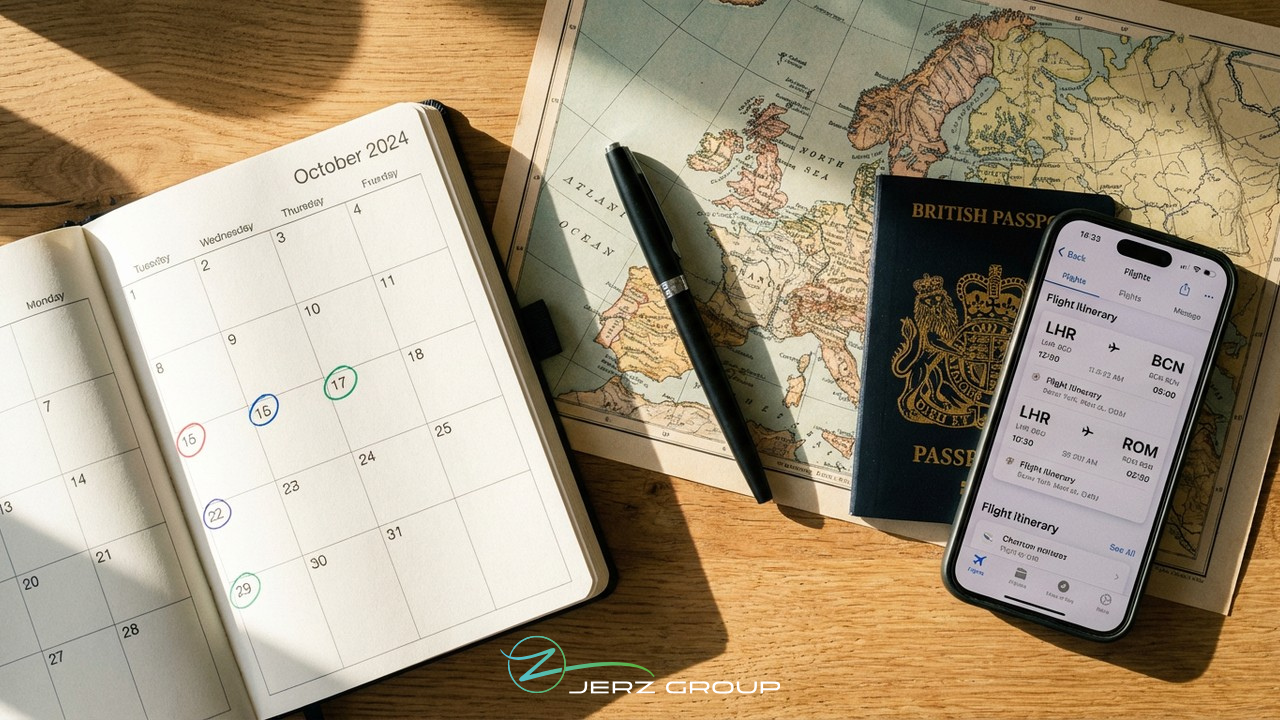
The 183-day rule is a standard benchmark used globally to determine tax residence based on physical presence. If you spend 183 days or more in a country within a tax year, you are typically considered a tax resident there. This is why careful planning of your travel calendar is essential for any digital nomad looking to manage their tax obligations.
However, breaking tax residency in your home country often involves more than just staying away for 183 days. Tax authorities look at a range of factors to determine if you have truly left. These are often called "tie-breaker" rules and are used to decide which country has the primary right to tax you if you could be considered a resident of more than one.
You must proactively sever these connections to demonstrate that your "center of vital interests" has moved.
Essential Tools and Resources to Get Started
Embarking on a journey to a zero-tax lifestyle requires careful planning and the right resources. You'll need to gather specific documents, choose the right financial tools, and often, seek professional advice. This isn't something you can improvise, as mistakes can be costly.
Having everything in order from the start makes the process of obtaining a residence permit, setting up a business, and managing your banking much smoother. The following sections will outline the essential documents, financial solutions, and professional advisors you should consider.
Documents You’ll Need for Tax-Free Nomad Life
When you start applying for a residence permit, opening bank accounts, or setting up a business abroad, you'll find that a standard set of documents is almost always required. Gathering these in advance will save you significant time and frustration. Many documents will need to be notarized or have an apostille to be considered valid in a foreign country.
You should prepare both digital and physical copies of everything. For visa holders, having proof of your legal status is always necessary. It is also wise to have proof of your personal income, often in the form of bank statements or employment contracts, as many programs have minimum income thresholds.
Essential documents typically include:
- Passport: Valid for at least one year, with plenty of blank pages.
- Proof of Income: Bank statements for the last 6-12 months, employment contracts, or client invoices.
- Police Clearance Certificate: A criminal record check from your home country and any other country where you've lived for an extended period.
- Proof of Health Insurance: A comprehensive global health insurance policy is a common requirement.
Choosing the Right Banking and Payment Solutions

Your banking setup is a critical component of a successful zero-tax strategy. Relying on your home country bank account can maintain a strong financial tie and create problems. Instead, you'll need banking solutions that align with your international lifestyle and business structure. This often means looking at offshore banking or modern digital alternatives.
Opening a bank account in a foreign country as a non-resident can be challenging, but it is achievable. Offshore jurisdictions like the UAE or certain Caribbean nations are accustomed to international clients. These banks offer multicurrency accounts and are well-suited for an offshore business.
For day-to-day transactions, Electronic Money Institutions (EMIs) can be powerful payment solutions.
- Offshore Bank Account: Consider a stable jurisdiction with a good reputation for your primary business banking.
- EMIs (e.g., Wise, Revolut): Excellent for low-fee currency conversions and international transfers.
- Crypto Wallets: For crypto earners, secure hardware wallets are essential for managing digital assets. Be aware that some traditional banks may freeze your account for crypto-related activity, so separating these funds is wise.
Trusted Advisors and Online Platforms for Tax Planning
While you can learn a lot on your own, navigating international tax law is complex and the stakes are high. Engaging trusted advisors is one of the smartest investments you can make. A good tax advisor can create a personalized strategy, ensure compliance, and save you from costly mistakes.
Beyond professional help, there are many online platforms and communities that provide valuable information and support. These can be great for getting firsthand accounts from other digital nomads who have gone through the process. However, always verify legal or tax advice with a qualified professional.
Here are some resources to consider:
- International Tax Lawyers: Specialists who understand cross-border tax planning and residency.
- Corporate Service Providers: Companies that help you set up and manage an offshore business.
- Digital Nomad Communities: Online forums and Facebook groups can offer practical tips on banking, visas, and daily life in different countries.
- Nomad Capitalist and other similar platforms: Offer comprehensive resources and consulting for building a global, tax-optimized life.
Step-by-Step Guide: How to Legally Pay Zero Tax as a Digital Nomad

Now that you understand the core principles, let's walk through the practical steps to building your zero-tax strategy. This is a multi-layered process that involves changing your residency, restructuring your business, and setting up the right financial infrastructure.
Following this five-step plan will put you on the path to legally minimizing your tax obligations. Each step builds on the last, creating a compliant and powerful framework for financial freedom. We will cover choosing the right country, setting up an offshore business, and more.
Step 1: Choose a Zero-Tax or Territorial-Tax Country
The first and most critical step is selecting the right jurisdiction to serve as your new "base." Your choice will depend on your personal preferences, business needs, and long-term goals. There are two main types of countries to consider: zero-tax countries and territorial-tax countries.
Zero-tax countries have no personal income tax system at all. This is the most straightforward option, as there are no tax rates to worry about on your income. However, be aware that these countries often have high VAT or import duties. Territorial-tax countries, on the other hand, only tax income that is sourced from within their borders. For a digital nomad whose income is earned from clients abroad, this can also result in a 0% effective tax rate.
Top choices for digital nomads include:
- UAE: Though it recently introduced a low corporate tax and a 5% personal income tax, it remains a top hub with excellent infrastructure and visa programs.
- Panama: A classic territorial-tax country that does not tax foreign-source income.
- Paraguay: Another territorial-tax option with a low cost of living and straightforward residency.
Step 2: Set Up an Offshore Business Structure

To truly separate your income from high-tax systems, you need to structure your business correctly. For most freelancers and remote business owners, this means creating an offshore company in a zero-tax jurisdiction. This company will officially earn your income, and you can then pay yourself a salary or dividends from it.
How to structure my business to avoid taxes? The answer lies in incorporation. By operating through a corporation in a foreign country like the UAE, British Virgin Islands (BVI), or even Estonia (with its 0% tax on reinvested profits), you create a legal entity that is not tied to your home country's tax system. This is a fundamental part of offshore tax strategies for digital nomads.
The right structure depends on your business type:
- Freelancers: Can establish a simple Free Zone company in the UAE to invoice clients globally.
- Business Owners: A BVI or similar offshore company provides privacy and flexibility.
- Distinction: Your offshore company pays you, the individual. This separates your business income from your personal income tax situation, which you solve through your residency choice.
Step 3: Obtain Residency Without Living There
One of the most powerful strategies is to gain a residence permit in a country without being obligated to live there full-time. This gives you a legal "Plan B" and a formal tie to a low-tax jurisdiction, which can be crucial for breaking tax residency in your home country. Many countries offer residency programs that have minimal or no physical presence requirements.
How to get residency without living there? The key is to find programs designed to attract investors or skilled individuals, which often prioritize financial contribution over physical presence. These are different from a standard nomad residence permit, which usually assumes you'll be in the country.
Viable options for this strategy include:
- Paraguay: Offers a straightforward path to a residence permit and eventually permanent residence with very minimal stay requirements.
- Panama: The Friendly Nations Visa (though recently updated) and other investment-based options can lead to residency.
- Digital Nomad Visas: Some, but not all, digital nomad visas offer a path to residency without strict stay requirements. You must check the specific rules for each country.
Step 4: Open a Bank Account as a Non-Resident

Once you have your residency and offshore business structure, you need a place to put your money. Opening a bank account as a non-resident is a crucial step to disconnect your finances from your high-tax home country. This account will be in the name of your offshore company or you personally, depending on your setup.
How to open a bank account as a non-resident? While it has become more difficult due to global compliance standards, it is still very possible. The key is to choose the right bank and jurisdiction and have all your documentation in order. Banks in jurisdictions like the UAE, Singapore, or Switzerland are experienced in dealing with international clients.
Key considerations for non-resident banking:
- Choose the Right Jurisdiction: Look for politically and economically stable countries with strong banking sectors.
- Prepare Your Documents: Banks will require extensive documentation, including your passport, proof of address, business documents, and information on the source of your funds.
- Consider Remote Opening: Some banks allow you to open an account remotely, while others may require an in-person visit. A corporate service provider can often facilitate this process.
Step 5: Consider a Second Passport for Extra Flexibility
For those seeking the ultimate level of freedom and flexibility, a second passport is a powerful tool. While an optional step, it provides greater mobility, a backup plan in times of crisis, and can even offer additional tax advantages. A second passport can sometimes make it easier to sever ties with your country of birth.
How to get a second passport fast? The quickest routes are typically through Citizenship by Investment (CBI) programs, offered by several Caribbean nations like St. Kitts & Nevis. These programs allow you to make a significant investment or donation in exchange for citizenship. Another common path is through ancestry. For example, you might wonder, "can I get EU citizenship through my grandparents?" In some European countries like Ireland, Italy, or Poland, this is a possibility if you can prove your lineage.
Benefits of a second passport include:
- Visa-Free Travel: Access to more countries without needing a visa.
- Tax Flexibility: The ability to live and establish residency in a wider range of countries.
- Increased Security: A second citizenship provides a "Plan B" if your home country becomes unstable.
Common Mistakes That Trigger Taxes for Digital Nomads
Even with a solid plan, it's easy to make a mistake that brings you right back into a high-tax system. Governments are actively looking for reasons to claim you as a tax resident, and a single misstep can undo all your hard work. Ignoring the rules is a surefire way to get a surprise tax bill.
These common errors are the tripwires that keep nomads paying taxes. From overstaying your welcome in a country to keeping too many ties to home, you must be vigilant to maintain your tax-free status. The next sections will detail these pitfalls so you can avoid them.
Overstaying in One Country or Ignoring Exit Requirements
This is the most frequent and dangerous mistake. As we've discussed, spending more than 183 days in one country will almost certainly make you a tax resident there. Many digital nomads are not diligent about tracking their days, and a few extra weeks can have huge financial consequences. This is the mistake that keeps you paying taxes.
You need to be meticulous. Use a spreadsheet or app to track your physical presence in every country you visit. Remember that days of arrival and departure often count as full days. Even with a digital nomad visa or residence permit, you are not immune to the 183-day rule unless the law specifically exempts you.
Critical points to remember:
- The 183-Day Rule is Key: Do not exceed this threshold in any country where you don't want to be a tax resident.
- Visa Runs Aren't a Solution: Simply crossing a border for a day and coming back does not reset the clock for tax residency purposes.
- Know the Local Rules: Some countries have shorter thresholds or different ways of counting days. Always research the specific tax residency rules of the countries you visit.
Keeping Financial or Family Ties to Your Home Country

Leaving your home country physically is only half the battle. If you maintain significant ties, your home country's tax authority can argue that you are still a tax resident. This is part of the "center of vital interests" test, where they determine where your life is truly based. Keeping strong connections is a red flag they will not ignore.
Financial ties are a major factor. Maintaining your primary bank accounts, credit cards, investments, or real estate in your home country signals that you haven't really left. The same goes for personal ties. If your spouse or minor children remain in your home country, it is extremely difficult to argue that you have severed your residency.
To avoid this trap, you must:
- Move Your Finances: Close your primary bank accounts at home and move to international or offshore banks.
- Cut Property Ties: Sell or place your home on a long-term rental lease. Do not keep it available for your personal use.
- Relocate as a Family: If you have a family, they should relocate with you to successfully sever residency ties.
Failing to Meet Reporting and Compliance Obligations
Achieving a zero-tax life does not mean you are invisible. In fact, in today's world of global financial transparency, compliance and reporting are more important than ever. Failing to file the necessary forms can lead to severe penalties, even if you don't owe any tax. This is where governments catch you.
For example, US citizens must file a tax return every year to report their foreign income, even if it's all excluded by the FEIE. They also have to report foreign bank accounts through FBAR and FATCA. The OECD's Common Reporting Standard (CRS) means that banks around the world are automatically sharing your financial information with your home country's tax authorities. There is no hiding.
Key compliance obligations include:
- Filing Exit Forms: Some countries require you to file a final tax return or an "exit tax" form when you leave.
- Annual Tax Filings: Continue to file in your home country if required (e.g., for US citizens).
- Reporting Foreign Accounts: Comply with FBAR, FATCA, and other foreign account reporting requirements.
- Corporate Filings: Ensure your offshore company meets all its annual reporting and substance requirements.
Follow Jerz


