

The Two-Base Lifestyle: A Smarter Path to Residency and Peace of Mind
For generations, the path to stability seemed clear: plant your roots in one country, build a career, and trust the system. Yet, you may feel a quiet sense of anxiety as rules change and politics become more unpredictable, particularly in relation to political stability. The advice to simply pick up and move for a Golden Visa or real estate investment feels incomplete. True stability doesn't come from committing harder to a single plan; it comes from creating options. A two base lifestyle gives you that power, offering a structured way to achieve permanent residency and peace of mind. When considering a backup plan, some of the most popular countries for establishing a second residency include Portugal, Spain, Greece, Panama, and Malta, due to their accessible pathways such as Golden Visa programs, favorable tax regimes, and appealing quality of life.
The Hidden Risks of the One Base Lifestyle
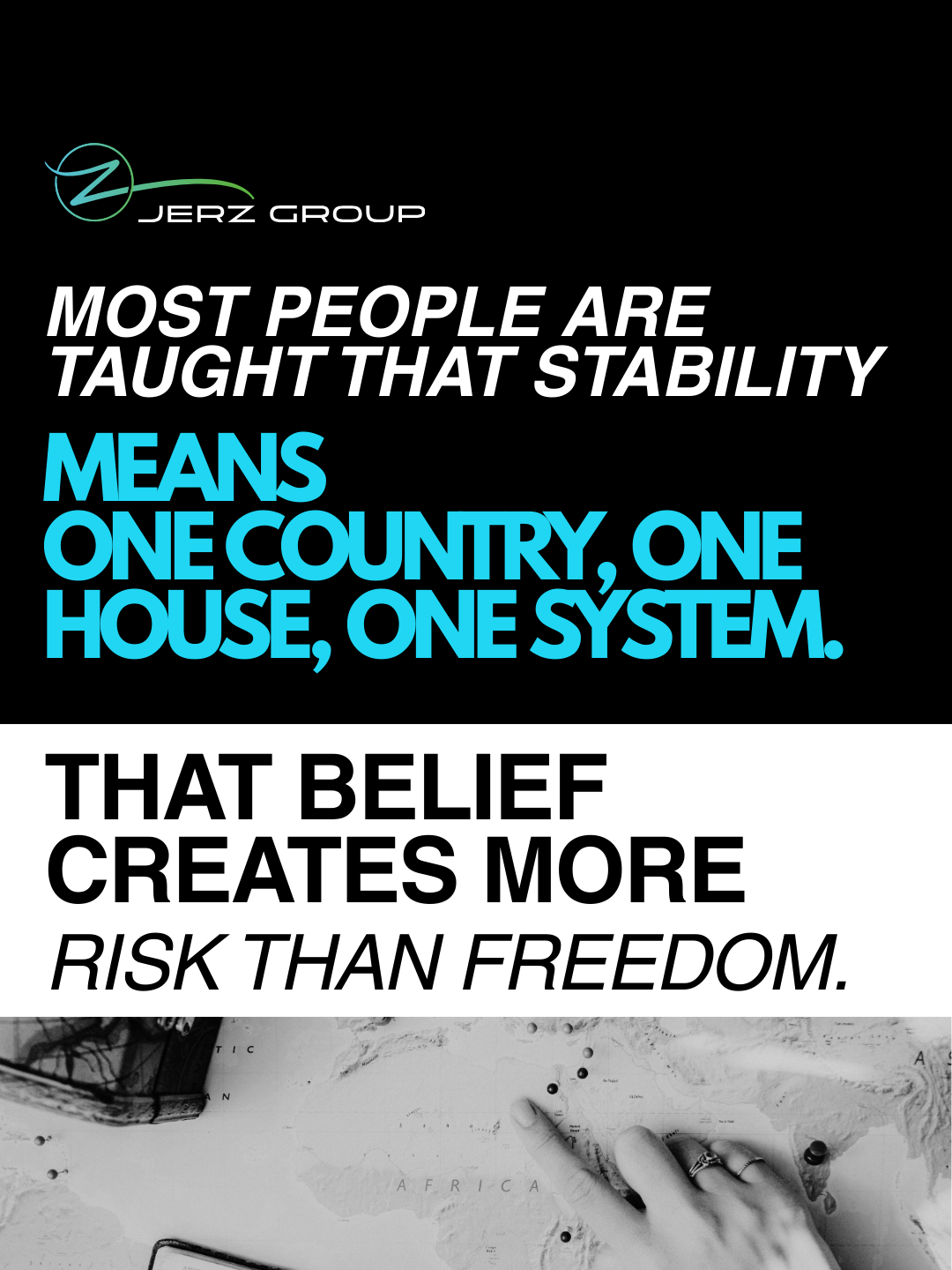
Relying on a single country for your home, finances, and future creates a hidden vulnerability. Your entire life is subject to the decisions of one government, the health of one economy, and the shifts in one political climate. This dependency makes you a captive tax resident, creating a single point of failure in your life plan. If you want to obtain a second residency in Europe now that many golden visa investment programs have ended, the step-by-step process typically involves first researching available countries that offer alternative residency schemes. Next, prepare the required documentation, such as proof of income, health insurance, and sometimes rental agreements. Then, submit your residency application to the relevant government authority, attend any necessary interviews, and upon approval, register your address and fulfill any ongoing obligations to maintain your new residency status, like periodic renewals or minimum stay requirements.
Effective risk management isn't about fear; it's about building resilience. By diversifying where you live and hold your assets, you move from a fragile position to one of strength and flexibility. Let's look at why this single point of failure is a problem you can no longer afford to ignore.
The “Single Point of Failure” Problem Explained
What happens if the country you call home suddenly changes its rules? Government risk is real. New tax laws, economic instability, or shifting political winds can dramatically impact your financial well-being and personal freedom. When your entire life is tied to one jurisdiction, you are exposed to all its downsides with no alternative.
A second residency acts as the ultimate insurance policy. The key benefit is not just about having another place to go; it is about decoupling your fate from a single system. By securing a residence permit in a second country with proof of good standing, you create redundancy.
This strategy provides immense peace of mind. If your primary country faces a downturn or unfavorable changes, you already have a legal, established alternative. This reduces your personal risk and gives you control over your future, ensuring that you are never trapped by circumstances beyond your control.
How Government and Tax Systems Box You In

Governments and tax systems are designed with the assumption that you are a permanent, stationary resident. They are built to maximize their claim on your income and assets, and corporate tax policies can greatly influence this. For citizens of countries like the United States, this is even more pronounced, as you are taxed on your worldwide income regardless of where you live.
Becoming a tax resident in a single country often means subjecting all your earnings to its laws, which can lead to high tax burdens and complex reporting. Even if you move, you might still face double taxation issues if your home country and new country don't have a treaty.
A second residency strategy allows you to legally manage your tax obligations. By carefully structuring your residencies and physical presence, you can potentially establish tax residency in a more favorable jurisdiction. This isn't about evasion; it's about using international rules to your advantage to optimize your financial life, whether through government bonds or other qualifying investments.
Flexibility vs. False Security: What Really Matters
Many people mistake permanence for security. They believe that owning a home and staying in one place for decades is the safest path. However, true stability in today's world comes from flexibility—the ability to adapt to changing circumstances without uprooting your entire life.
A single legal residency can feel like a trap when conditions change. In contrast, holding multiple temporary residence options gives you choices. You gain the freedom of movement to live, work, or travel as you see fit, enhancing your overall quality of life. This strategy allows you to take advantage of geographic arbitrage, accessing better services or lower costs in different locations.
Real security is about having control over your choices. It means you can:
- Spend time in a location with a better quality of life whenever you choose.
- Legally reduce your tax burden by managing your physical presence.
- Protect your assets from the risks of a single jurisdiction.
Why “Just Move Somewhere Better” Isn’t Enough
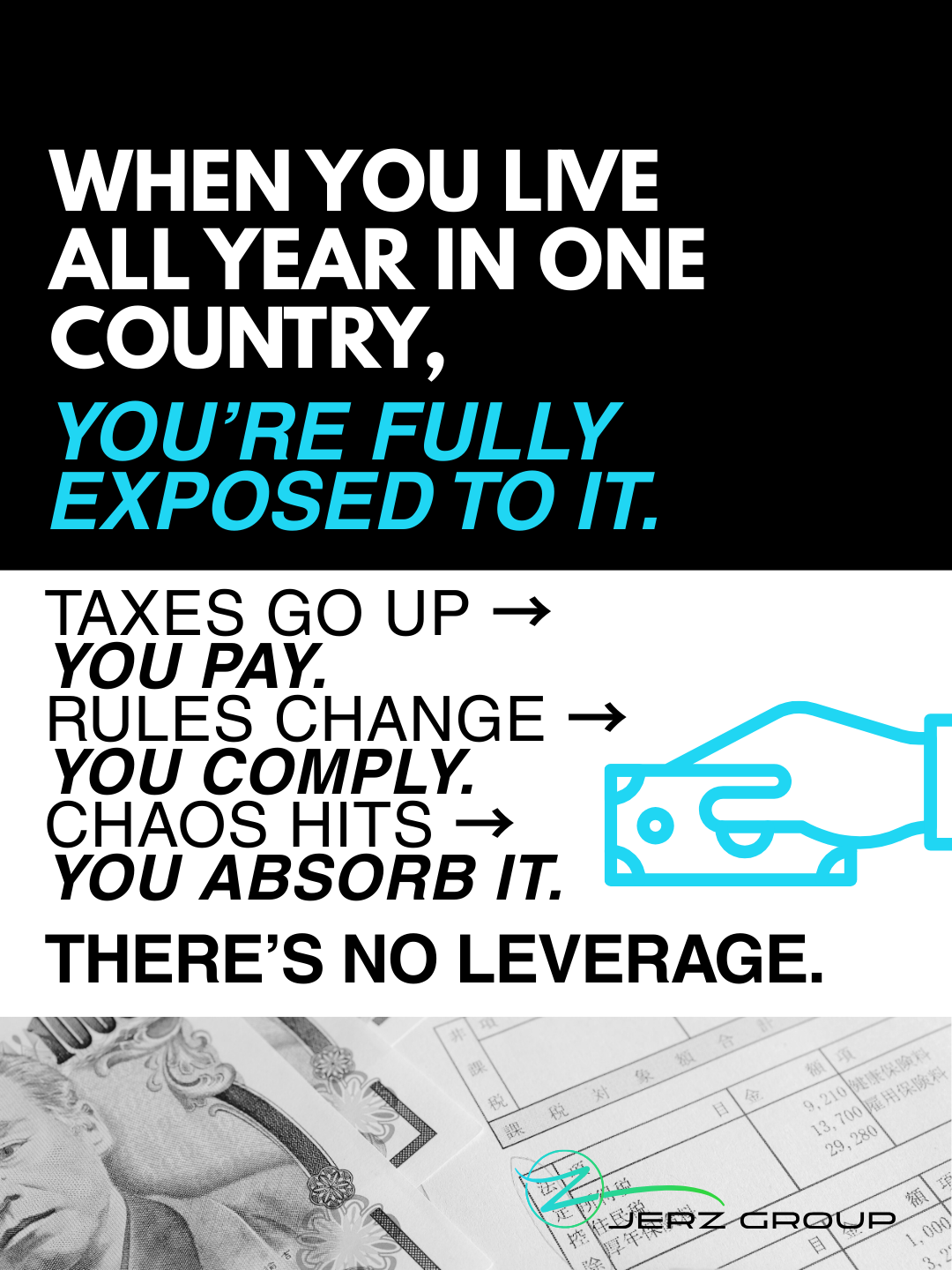
The idea of selling everything and moving to a "better" country sounds appealing, but it's often a shortsighted solution. Many who make this leap find themselves facing the same problems they tried to escape, just in a new location. Without a proper strategy, you simply trade one set of challenges for another.
Issues like rising new taxes, tightening visa requirements for your residency permit, and an increasing cost of living can emerge within a few years. A simple relocation fails to address the core problem: dependency on a single system, especially without passive income sources. The following sections explore why this approach often falls short.
The Honeymoon Phase and Its Shortcomings
When you first arrive in a new country, everything can seem perfect. The culture is exciting, the scenery is beautiful, and the initial improvement in your quality of life is undeniable. This is the honeymoon phase, and while enjoyable, it often masks the practical realities of living somewhere new long-term.
Over time, the challenges of dealing with a different government, bureaucracy, and legal system become apparent. What seemed like a paradise can start to feel just as restrictive as your home country. This is why many experienced professionals now seek a "Plan B residency," including options like a U.S. green card.
A Plan B residency is a second permanent residence permit you secure as a backup, not necessarily as a place for immediate, full-time relocation. People consider it because it provides optionality without the pressure of a full move, allowing them to maintain their lifestyle while having a secure exit ramp if needed.
Relocating and the Return of Old Problems

After the initial excitement of relocating wears off, you might notice familiar problems creeping back in. The cost of living may start to rise, the political climate could shift, or the local economy might experience a downturn. Simply moving does not guarantee that these issues won't follow you.
Choosing the best strategy for securing a second residency involves thinking beyond a simple move. Instead of putting all your eggs in another single basket, you should look at residency programs that offer flexibility. The goal is to build a resilient lifestyle, not just find a new place to live.
A strategic approach involves selecting a country in the Middle East for permanent residence that complements your existing life, rather than completely replacing it. This way, you diversify your risk and avoid recreating the same single-point-of-failure problem you were trying to solve.
From New Taxes to Tightening Visas: Recurring Headaches
One of the biggest pitfalls of a simple relocation is being caught off guard by changing rules. A country that seems attractive today might introduce new taxes or regulations tomorrow that negatively impact you as a foreign resident.
Many visa holders have experienced this firsthand. A country like Costa Rica might increase the minimum investment for its residency program, change the rules on taxing worldwide income, or tighten renewal requirements. These recurring headaches can make your new home feel just as insecure as your old one. Some tax-friendly countries like the UAE or Paraguay offer territorial tax systems, but even these can change.
Common issues that arise include:
- Unexpected new taxes on wealth or foreign income.
- Stricter visa renewal processes and requirements.
- Sudden increases in the minimum investment for residency programs.
The Digital Nomad Myth and the Danger of Burnout

The image of the digital nomad, constantly traveling with a laptop, is often sold as the ultimate form of freedom. However, this lifestyle of perpetual motion is not sustainable for many remote workers. The lack of roots, community, and structure can lead to severe burnout, negatively impacting your quality of life.
True freedom isn't about being rootless; it's about having control. The two-base strategy offers an alternative for professionals who want stability without being tied down, avoiding the exhaustion that comes with constant movement. The following sections explain why this structured approach is superior.
Why Constant Movement Isn’t the Answer
For professionals engaged in remote work, focus and productivity are paramount. Constant movement disrupts this. Living out of a suitcase, navigating new cities every few weeks, and dealing with logistical headaches is draining. It pulls your energy away from your work and personal well-being.
This is a primary cause of burnout among long-term travelers. The initial thrill of exploration gives way to a longing for familiarity and routine. While geographic arbitrage can improve your quality of life by lowering costs, it becomes ineffective if your mental health and productivity suffer.
A two-base lifestyle provides the perfect balance. It allows you to enjoy the benefits of living in different places without the instability of constant travel. You can move between two familiar locations, maintaining a high quality of life while staying grounded and focused.
Impact of Rootlessness on Health, Focus, and Relationships
Humans are wired for connection and community. A lifestyle of constant rootlessness makes it difficult to build the deep, meaningful relationships that are essential for our mental and emotional health. For remote workers, this isolation can be particularly challenging.
The lack of a stable base also affects your physical health and focus. It's hard to maintain healthy routines, a consistent diet, or a regular sleep schedule when you are always on the move. The benefit of a second residency is that it provides a stable foundation, which has significant emotional advantages.
By establishing two bases, you can engage in seasonal living, building communities in both locations. You get the best of both worlds: the excitement of a global lifestyle and the stability of having places that feel like home. This structure supports your overall quality of life and well-being.
When Freedom Creates Exhaustion
There is a point where unstructured travel freedom becomes a source of exhaustion. The constant need to plan your next move, worry about visa runs, and meet the minimum stay requirements of different countries can feel like a full-time job. This is the paradox of the rootless lifestyle.
A Plan B residency is considered by many to be the antidote. It provides a legal, stable foundation from which you can operate. Instead of worrying about your right to be in a country, you have a secure residence permit.
This structured approach transforms your experience. Freedom of movement is no longer about escaping visa limitations but about choosing where you want to spend your time. This is why a two-base strategy is so powerful; it provides:
- A legal anchor that eliminates visa-related stress.
- The ability to plan your year without worrying about your physical presence.
- A sense of control that prevents burnout.
What Is the Two Base Lifestyle?
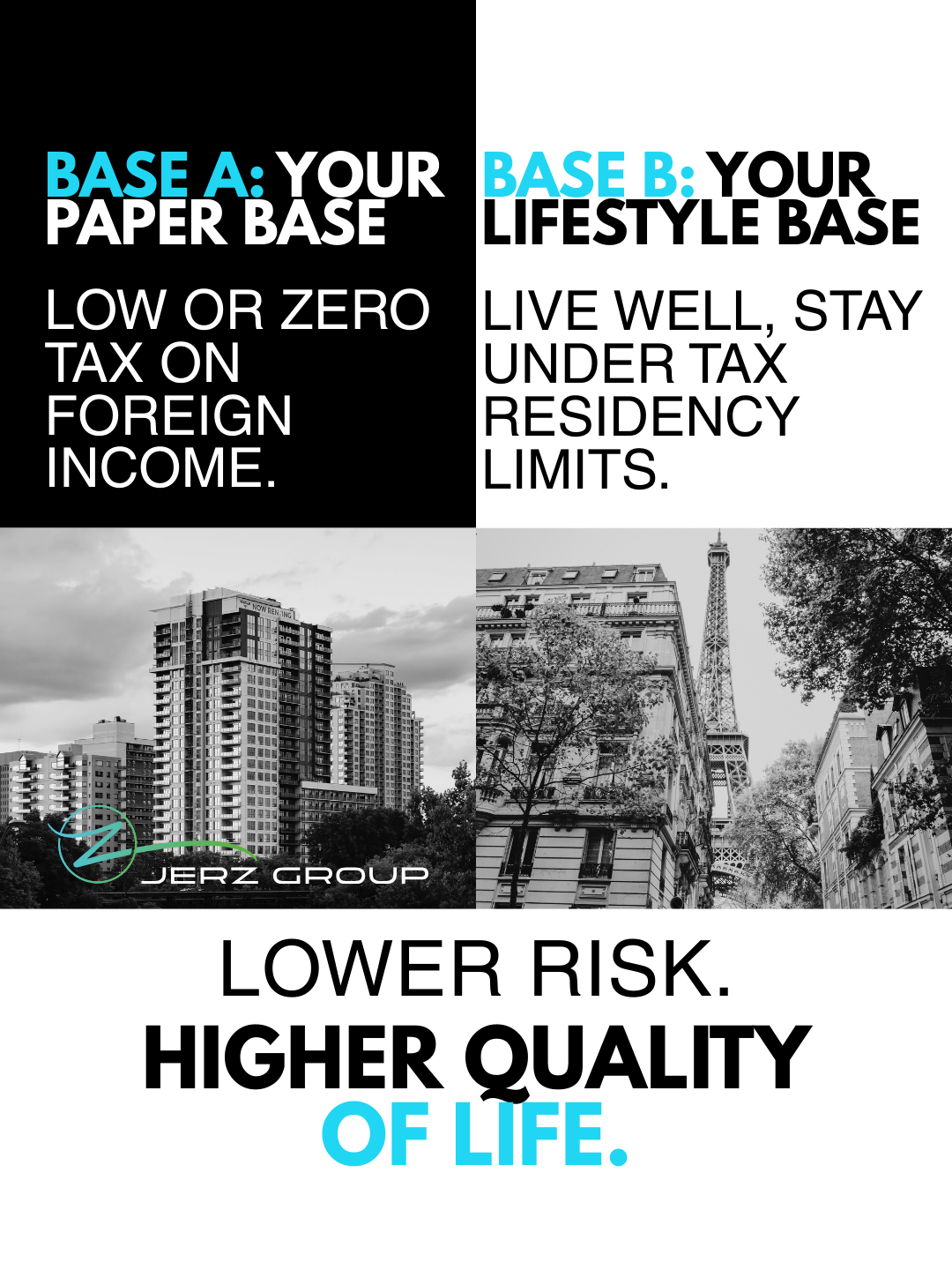
The two base lifestyle is a strategic approach to living that gives you both stability and flexibility. Instead of being tied to one country or constantly moving, you intentionally establish two distinct homes. This isn't about endless travel; it's about creating a designed life that enhances your quality of life.
This model involves setting up a "paper base" for your legal and financial affairs and a "living base" where you enjoy your lifestyle. It allows you to manage your physical presence strategically, creating a robust Plan B residency. Let's explore the core components of this powerful strategy.
Core Principles of a Second Residency Strategy
At its heart, a second residency strategy is about intentional diversification. Just as you wouldn't put all your money into one stock, you shouldn't tie your entire life to one country. The core principles are designed to build resilience and optionality.
One of the main reasons people consider a Plan B residency is to legally manage their status as a tax resident. This involves selecting citizenship programs and residency programs that align with your financial goals and offer flexibility. The goal is to create a structure that serves you, rather than being a servant to a single system.
This approach is proactive, not reactive. You are not waiting for a crisis to happen; you are building a framework that protects you from future uncertainty. It's a long-term plan for personal and financial security in an unpredictable world.
Paper Base: Tax Residency, Legal Domicile, and Banking

Your "paper base" is the legal and financial anchor of your two-base lifestyle. This is the jurisdiction where you establish your official tax residency, legal domicile, and primary banking relationships. Choosing the right paper base is a critical strategic decision.
International laws use several tests to determine tax residency, including physical presence (like the 183-day rule), the location of your primary home, and your center of vital interests. Your paper base should be a country with a stable government and a legal framework that aligns with your goals.
This base handles the administrative side of your life. It's where your official documents are centered and where you manage your financial affairs. Setting this up correctly provides a solid, compliant foundation for your global lifestyle, giving you confidence and peace of mind.
Living Base: Quality of Life, Community, and Seasonal Flexibility

While your paper base is for administration, your "living base" is all about your quality of life. This is the new country where you choose to spend significant time because you enjoy the lifestyle, culture, and community. It's the "home" part of your two-base equation.
This model allows for incredible geographic arbitrage and lifestyle improvements. You can choose a living base with a better climate, lower cost of living, or more access to activities you love. It also offers seasonal flexibility, allowing you to enjoy the best weather in both of your bases throughout the year.
The living base is where you build your community and social connections. It provides the grounding that is often missing from a nomadic lifestyle. A well-chosen living base offers:
- An enhanced quality of life.
- A sense of belonging and community.
- The ability to live a more balanced and enjoyable life.
The 183 Day Rule and Tax Residency Optimization

The 183 day rule is a common benchmark used by countries to determine tax residency based on your physical presence. Understanding this rule is key to legally optimizing your tax obligations within a two-base lifestyle. It is a tool for management, not a loophole for avoidance.
By strategically managing your time in different jurisdictions, including Hong Kong, you can maintain your legal residency in multiple locations while influencing where you qualify as a tax resident. The following sections explain how this rule works and how you can use it to your advantage through various residency programs.
What Is the 183 Day Rule and How Does It Work?
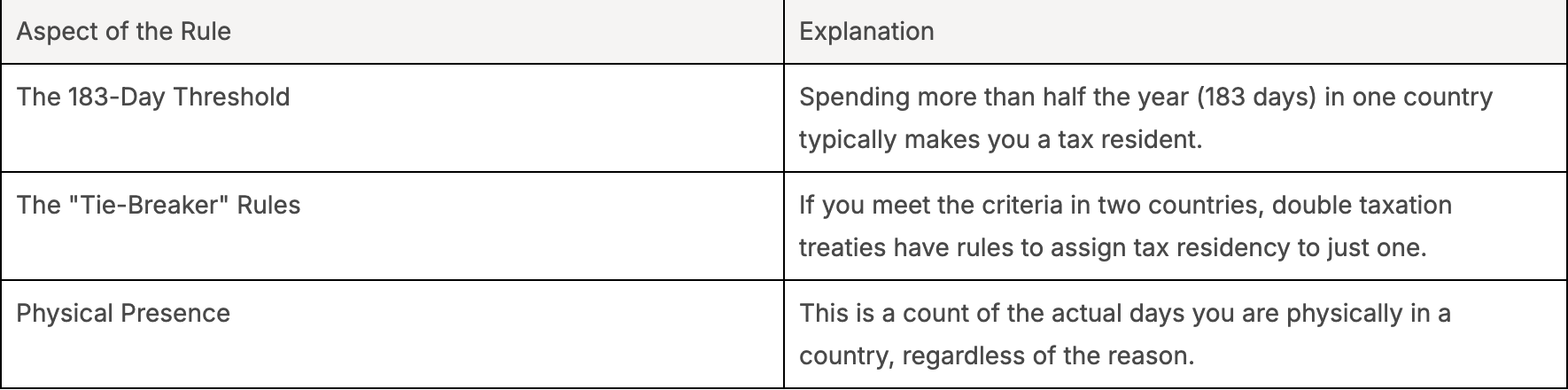
In simple terms, the 183 day rule states that if you spend 183 days or more in a country during a tax year, you are generally considered a tax resident there. This means you may be liable to pay taxes on your global income in that country. This is one of the primary ways your tax obligations are determined.
However, the rule is not universal, and its application varies. Some countries have different day counts, while others use additional tests to determine tax residency, such as where your permanent home is located or where your financial interests and investment requirements are centered. The minimum stay requirement for keeping your visa is often different from the threshold for tax residency.
Understanding the specific rules for each of your bases is crucial for managing your physical presence and tax obligations effectively. A second residency can shift your primary tax home if you spend less than 183 days in your original home country.
Navigating Tax Residency Legally in Multiple Countries
Managing legal residency in multiple countries requires careful planning to avoid complications like double taxation. International laws and tax treaties are in place to determine who qualifies for tax residency when an individual has ties to more than one nation. The goal is to have a single "tax home."
The process involves analyzing the "tie-breaker" rules found in most double taxation agreements. These rules look at factors beyond just physical presence, such as where you have a permanent home, where your personal and economic ties are closer (center of vital interests), and your country of habitual abode.
By structuring your affairs correctly, you can ensure that you are considered a tax resident in the jurisdiction that is most advantageous for you, providing you with valuable EU access. This is a legal and compliant strategy to manage your worldwide income tax obligations, but it often requires professional advice to navigate correctly.
Balancing Time in Each Country to Optimize Taxes
Effectively managing your tax obligations with a second residency comes down to balancing your time, particularly when considering the years of residency required in each country. By carefully tracking your physical presence in each country, you can stay below the 183-day threshold in higher-tax jurisdictions and establish tax residency in a more favorable one.
This strategy gives you control over your tax situation. Your legal domicile and tax residency do not have to be in the same place, provided you follow the rules of each country and any applicable tax treaties. This affects your tax obligations by shifting them to the country where you are legally deemed a resident for tax purposes.
To make this work, you must be disciplined in your planning. Key considerations include:
- Tracking your days in each country meticulously.
- Ensuring you meet the minimum stay requirements to maintain your visas.
- Aligning your physical presence with your intended tax residency status.
Reducing Risk: Why Two Bases Mean Greater Optionality

Having two bases might sound more complicated, but it actually reduces risk by creating redundancy. A one-base life puts all your eggs in one basket, making you vulnerable. A two-base life is a form of risk management that provides greater optionality and security.
This lifestyle diversification protects wealthy individuals like you from unpredictable government actions, financial instability, and personal burnout. It gives you the freedom of movement and the peace of mind that comes with a solid Plan B residency. Let's examine how this strategy builds a more resilient life.
Government, Banking, and Travel Risk Management
A key benefit of having a second residency is the mitigation of systemic risks, particularly when it comes to due diligence. If your primary country experiences political instability, a banking crisis, or imposes sudden travel restrictions, you are not trapped. You have another legal base you can operate from.
Imagine your bank accounts in one country are frozen or devalued overnight. If you have banking relationships in your second base, your financial life can continue uninterrupted. This diversification is a powerful tool for asset protection. The same applies to freedom of movement; if one passport or residence permit becomes restricted, another may not.
Having options in different jurisdictions provides a buffer against unforeseen events. It ensures that a crisis in one part of the world does not derail your entire life, which is one of the most significant advantages of this strategy.
How the Two Base Lifestyle Prevents Burnout and Chaos

The two base lifestyle is the antithesis of the chaotic, rootless existence that leads to burnout. Instead of constant, unstructured movement, it offers a predictable and stable framework. This is especially beneficial for remote workers who need consistency to be productive.
Knowing you have a legal residency and a familiar home waiting for you in two different places removes immense mental pressure. You are not constantly searching for your next destination or worrying about your visa status. This structure allows you to focus on your work, health, and relationships.
This approach to geographic arbitrage is sustainable. You can enjoy the benefits of living in different environments without the associated stress and exhaustion. It’s a designed lifestyle that prioritizes well-being and prevents the burnout so common among perpetual travelers.
Achieving True Peace of Mind with Lifestyle Diversification
Ultimately, the goal of a Plan B residency is to achieve true peace of mind. This comes from knowing you have options and that your future is not dependent on a single set of circumstances. It is the core reason why people consider this path.
Lifestyle diversification is a powerful concept that extends beyond just your finances. It means diversifying your experiences, your communities, and your exposure to risk. A second residency is a practical tool to achieve this, leading to a higher quality of life.
The sense of security you gain is invaluable. It allows you to live more freely and confidently, knowing you have a robust plan in place. This peace of mind is built on:
- Having a legal right to live in more than one country.
- Protecting yourself from political and economic instability.
- Having control over where and how you live your life.
Cultivating Multiple Roots Instead of Feeling Rootless
Adopting a two-base lifestyle isn't about becoming rootless. It's about cultivating multiple sets of roots in places you value. Instead of abandoning your connections, you are intentionally distributing them, creating a richer, more diverse life.
This approach offers significant emotional advantages. You can build community in different parts of the world, including the United Arab Emirates, and enjoy the benefits of seasonal living. A permanent residence in another country can become a genuine second home, adding stability and familiarity to your global lifestyle.
Building Community Across Borders
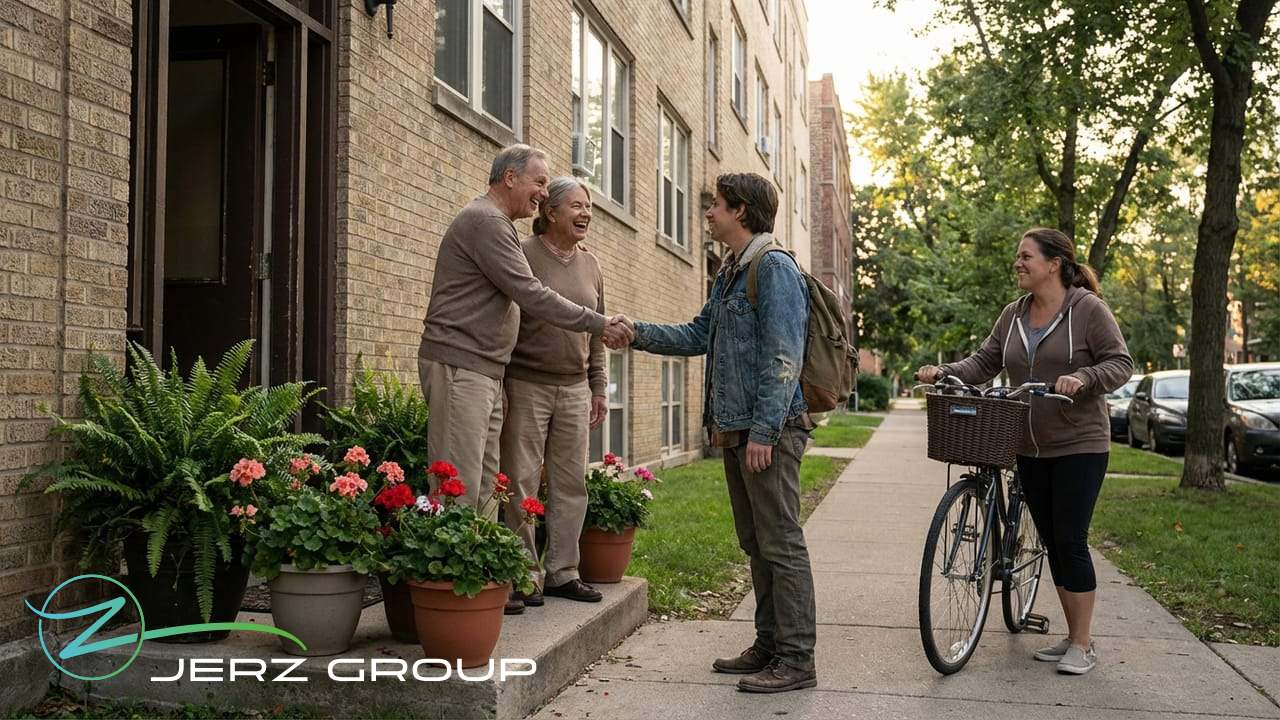
One of the biggest emotional benefits of a two-base lifestyle is the ability to build genuine community in more than one place. When you return to the same location year after year, you move beyond being a tourist and become part of the local fabric.
This is very different from the fleeting connections made during constant travel. You develop friendships, find your favorite local spots, and create a sense of belonging. For foreign nationals, this feeling of community is crucial for long-term happiness.
Many residency programs recognize the importance of family members and differ for individuals versus families. They often allow you to include your spouse and dependent children on your residence permit application. This enables your whole family to build connections and feel at home across borders.
Finding Familiarity and Stability with a Global Lifestyle Design
A well-designed global lifestyle is not chaotic; it's built on familiarity and stability. By having two bases, you create a predictable rhythm for your life. You know the language, the culture, and the people in both locations, which provides a strong sense of grounding.
This approach allows you to achieve geographic arbitrage in a sustainable way. You can improve your quality of life by splitting your time between a bustling city and a quiet retreat, or between different climates, without the stress of starting from scratch each time.
Securing permanent residence in your second base solidifies this stability. It transforms a foreign country into a true second home. A designed global lifestyle offers:
- The comfort of familiarity in multiple locations.
- The stability needed for deep work and personal growth.
- A higher quality of life through intentional living.
Emotional Advantages of Seasonal Living
Seasonal living is one of the most compelling emotional advantages of a two-base strategy. It allows you to enjoy the best of each location while avoiding the worst. Imagine spending your summers in the mountains and your winters on a warm beach, all while feeling at home in both places.
This rhythm has a profound impact on your quality of life. You can escape harsh weather, enjoy year-round access to your favorite outdoor activities, and participate in different cultural events. This is a tangible benefit of having a second residency and the freedom of movement it provides.
This lifestyle reduces the risk of feeling stuck or bored in one place. It keeps life interesting and dynamic while still providing the stability of having a home base. The ability to follow the sun or the seasons is a luxury that brings immense joy and well-being.
Practical Steps to Start Your Plan B Residency Without Being Ultra-Wealthy
You don't need to be ultra-wealthy to create a Plan B residency. While some Golden Visa programs require a significant real estate investment, many countries offer more accessible pathways through investment routes like investment funds or other options. An investor visa is within reach for more people than you might think.
The key is to approach the application process as a strategic process, not a dramatic leap. By starting small and testing your options, you can build a path to permanent residence without breaking the bank. The following sections offer some practical, high-level guidance.
Renting vs Owning and Testing Your Second Base
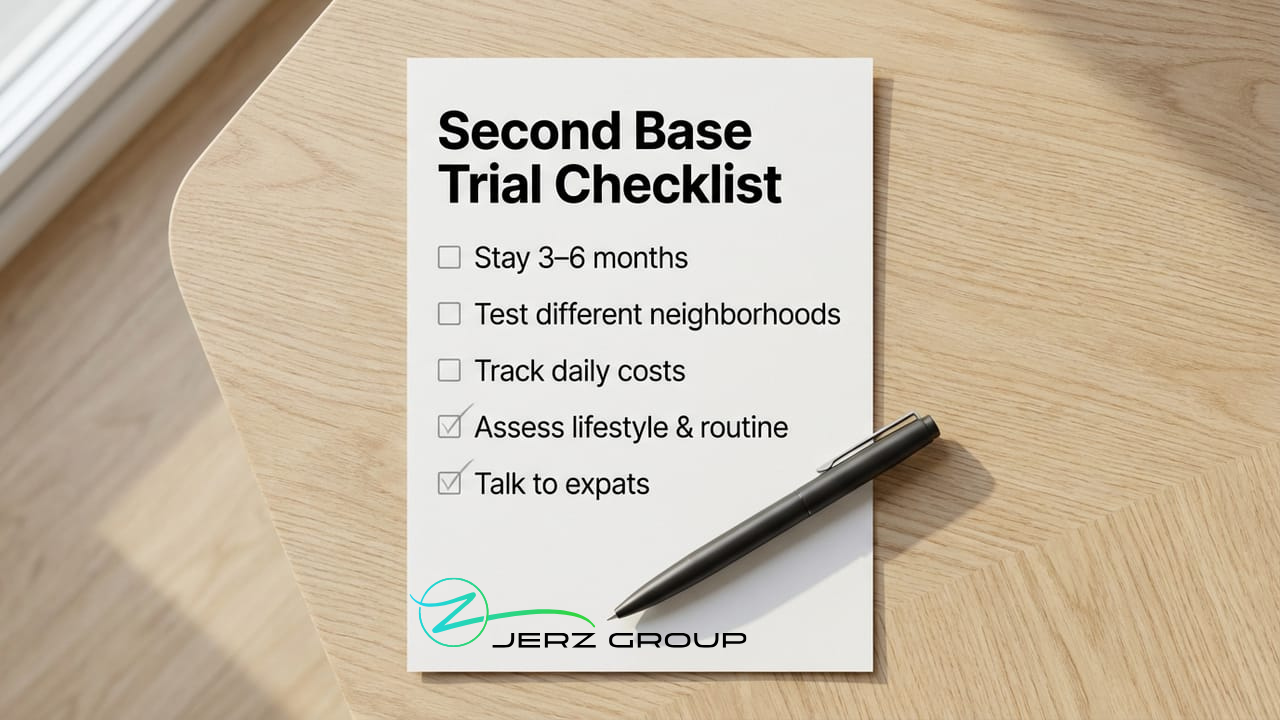
One of the best strategies for exploring a second residency is to test a location before making a large commitment. Instead of immediately pursuing a real estate investment, consider spending a few months there renting. This gives you a feel for the daily life, culture, and community.
Some Golden Visa programs, like Malta's and New Zealand's, even offer a renting option as part of their qualification criteria, reducing the need for a large upfront property investment. This "try before you buy" approach is a smart way to choose the best strategy for your needs.
Testing your second base helps you make an informed decision and avoid costly mistakes. Before committing, consider the following:
- Spend at least 3-6 months in the location.
- Explore different neighborhoods to find the right fit.
- Talk to other expats about their experiences.
Starting Small: No Need for a Dramatic Leap
Starting your journey toward a second residency doesn't have to be a dramatic, all-or-nothing leap. There are many investor visa programs with a relatively low minimum investment, such as those in Latvia or Serbia. The step-by-step process often begins with simple, manageable actions.
You can begin by researching countries that align with your lifestyle and financial goals. The process typically involves gathering basic documentation, such as proof of a clean criminal record and proof of address, and then exploring the specific requirements of your chosen program for foreign investors.
The key is to view this as a gradual strategy. You might start with a temporary visa to test a country, then apply for a longer-term UAE Golden Visa residence permit once you are certain it's the right fit. This methodical approach makes the goal of a second residency achievable and less intimidating.
Follow Jerz
02
Action Plan & Document Collection
We create a tailored action plan aligned with your chosen service(s). This stage includes gathering required documents and handling essential tasks such as translations, apostilles, and genealogical research.


